Line Strainers — Y, T, Mini & Basket, Polypropylene to 316 Stainless, 4 to 120 Mesh

20 products

Showing 1 - 20 of 20 products

Showing 1 - 20 of 20 products
View
Save $8.07
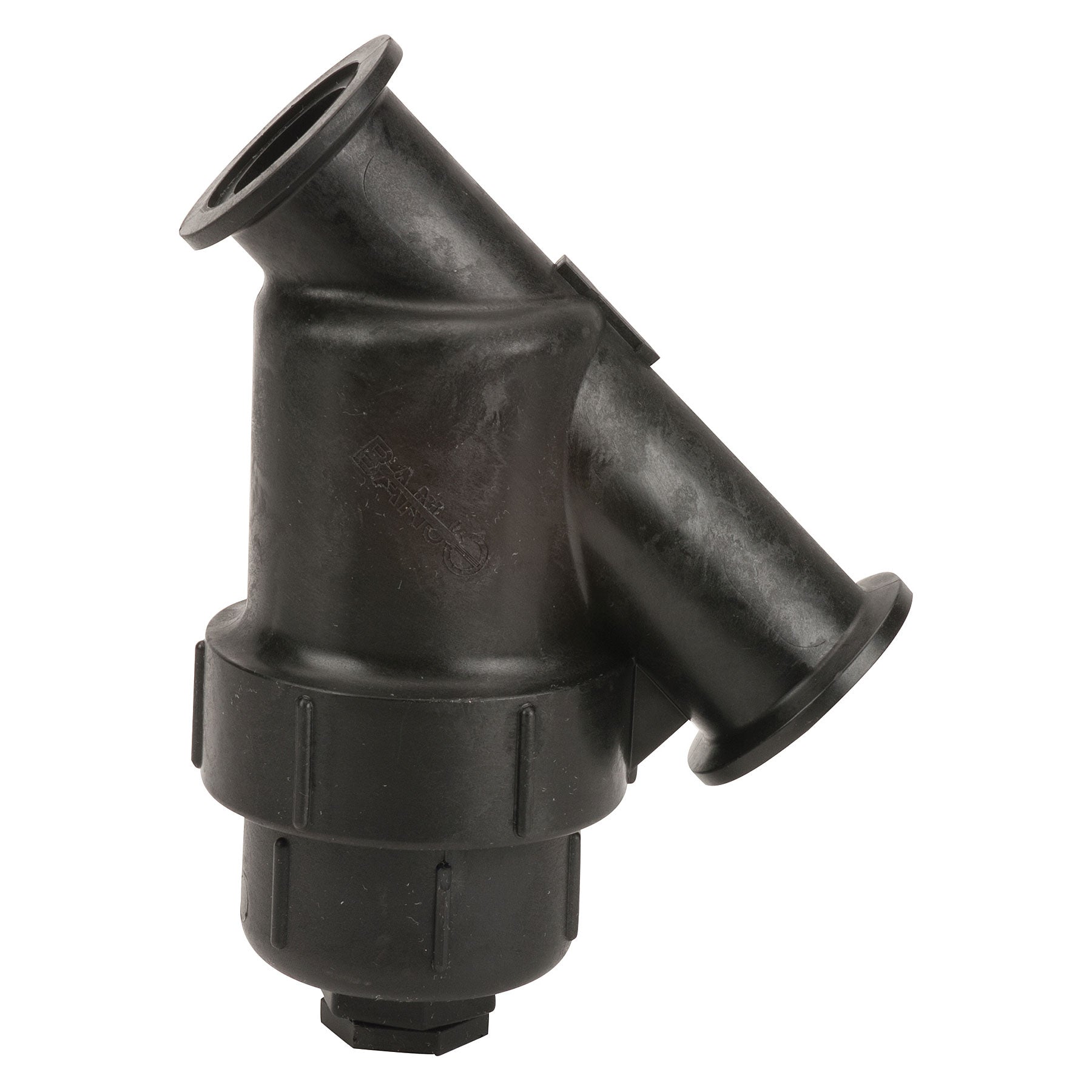
Banjo LS150-06 1-1/2 in. Polypropylene Y Strainer 6 to 120 MeshBanjo LS150-12 1-1/2 in. Polypropylene Y Strainer 6 to 120 Mesh
Save $31.71
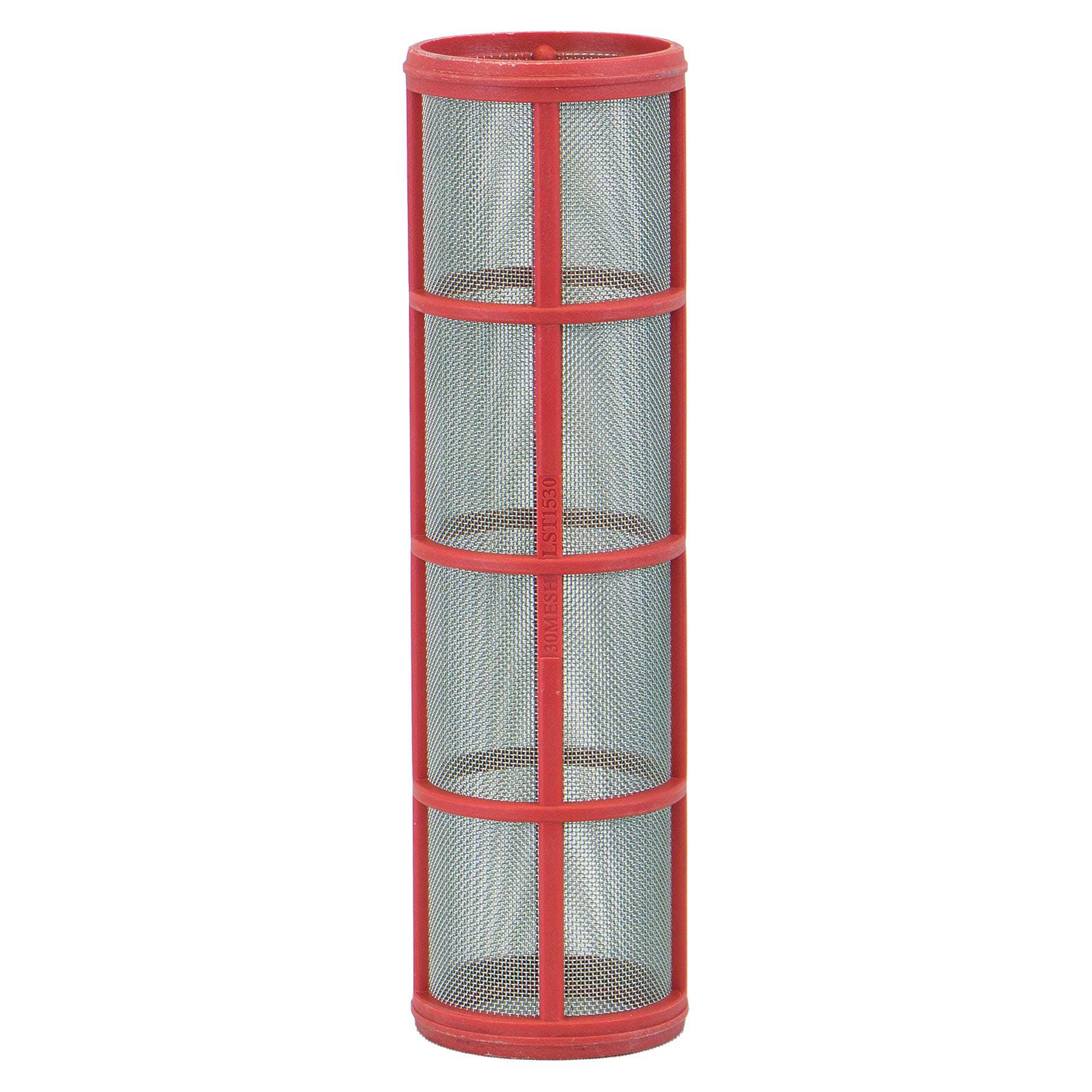
Banjo LS Series Line Strainer Replacement Screens, 3/4 in. to 3 in. SizesBanjo LS Series Line Strainer Replacement Screens, 3/4 in. to 3 in. Sizes
Choose options
Banjo Plug For 1 and 1-1/4 in. Line Strainer
Banjo Mini T Strainer Clear Bowl
Mini T Strainer Clear Bowl
Sale price$20.71
Banjo 3/4 in. Line Strainer EPDM Gasket
Banjo End Cap For 1-1/2 and 2 in. Line Strainer
Banjo 1-1/2 and 2 in. LSQ Strainer EPDM Gasket
Banjo 3/4 and 1 in. Poly T Strainer EPDM Gasket

Line Strainer Buying Guide

Line strainers trap solid debris upstream of pumps, valves, meters and instrumentation. Choosing one comes down to four things: housing style, body material, screen mesh, and seal material. This collection covers connection sizes from 1/2 in. to 4 in., with replacement screens down to 3/8 in.

Which Housing Style?

  • Y-strainer — an angled body that fits tight runs and is the most common style here. Available in polypropylene, PVC, clear PVC, CPVC and 316 stainless.
  • T-strainer — runs straight through the line, for installations where a Y body's angle will not fit. Carried in 3/4 in. through 2 in.
  • Mini T-strainer — small-bore lines such as metering pumps and injection points, in 1/2 in. and 3/4 in. with clear or black bowls so you can see buildup.
  • Manifold Y and T strainers — Banjo MLS and MLST series, built to bolt into manifold assemblies rather than thread into a pipe run.
  • True-union Y-strainer — unions on both sides so the strainer can be opened for cleaning without cutting pipe. Worth the extra cost on lines that need frequent screen changes.
  • Simplex basket strainer — a larger basket element for higher dirt-holding capacity than a Y screen, in clear PVC, 1/2 in. to 2 in.

Body Material

  • Polypropylene — broad chemical resistance at lower cost than stainless, and the most common body material in this collection.
  • Clear PVC — lets you see debris building up without opening the housing, useful where cleaning is scheduled on visible buildup rather than a fixed interval.
  • PVC — cost-effective for water and dilute-chemical lines.
  • CPVC — extends PVC's range to hotter lines.
  • 316 stainless steel — the choice for higher temperature and pressure, or abrasive service, where no plastic body is suitable.

Screen Mesh

Mesh number describes how fine the screen is. This collection runs 4 to 120 mesh. A lower number catches larger debris and restricts flow less; a higher number catches finer particulate but clogs faster and needs cleaning more often. As a starting point, use coarse mesh to protect pumps and general equipment from bulk debris, and fine mesh directly upstream of meters, nozzles or instrumentation that a small particle could damage. Confirm the pressure drop and flow rate for your line against the specific product's data sheet.

Seals and Replacement Parts

Seals here are EPDM or FKM (also labelled FPM). EPDM covers most water treatment and general chemical service at lower cost; FKM holds up better against fuels, oils and more aggressive chemicals that would degrade EPDM faster. Match the seal to the fluid, not just the body material.

Screens are wear items, and replacing one is cheaper than replacing a housing. This collection carries replacement screens for the Banjo LS and LST series, the Hayward YS series, and 316 stainless screens for Asahi sediment strainers, plus gaskets, end caps, plugs, Mini T clear bowls and stainless body and cap kits.

Line Strainer FAQ

What is the difference between a Y-strainer and a T-strainer?

Body shape. A Y-strainer's angled body takes up less space and is the more common choice; a T-strainer runs straight through the line, which suits installations where a Y's angle will not fit.

What does the mesh number mean, and how do I choose one?

It is the screen's fineness. Lower numbers catch larger debris with less flow restriction; higher numbers catch finer particulate but clog faster. Match it to what you are protecting: coarse for pumps and general equipment, fine for meters and instrumentation. This collection runs 4 to 120 mesh.

Can I get replacement screens for my strainer?

Yes. This collection carries replacement screens for the Banjo LS and LST series, the Hayward YS series, and 316 stainless screens for Asahi sediment strainers, so a worn screen does not mean replacing the whole housing.

What is the difference between EPDM and FKM seals?

EPDM covers most water and general chemical service at lower cost. FKM (FPM) holds up better against fuels, oils and more aggressive chemicals that would degrade EPDM faster.

Do I need a true-union strainer instead of a standard Y-strainer?

Only if the line will need frequent servicing. The unions let you open the strainer without cutting into the pipe; a standard Y costs less but is slower to service repeatedly.

What sizes and materials are available?

Connection sizes run 1/2 in. to 4 in. across polypropylene, PVC, clear PVC, CPVC and 316 stainless steel bodies, with replacement screens down to 3/8 in. Use the material and size filters above for current in-stock options.

Need Help Choosing?

Chemical resistance depends on the specific fluid, its concentration and temperature, so for anything outside typical water or dilute-chemical service, confirm compatibility before specifying. Our team has specialised in corrosion-resistant fluid handling since 1983 — fill out our Contact Us form and we will help you size it. You can also browse valves and fittings to complete the system.

Recently viewed