
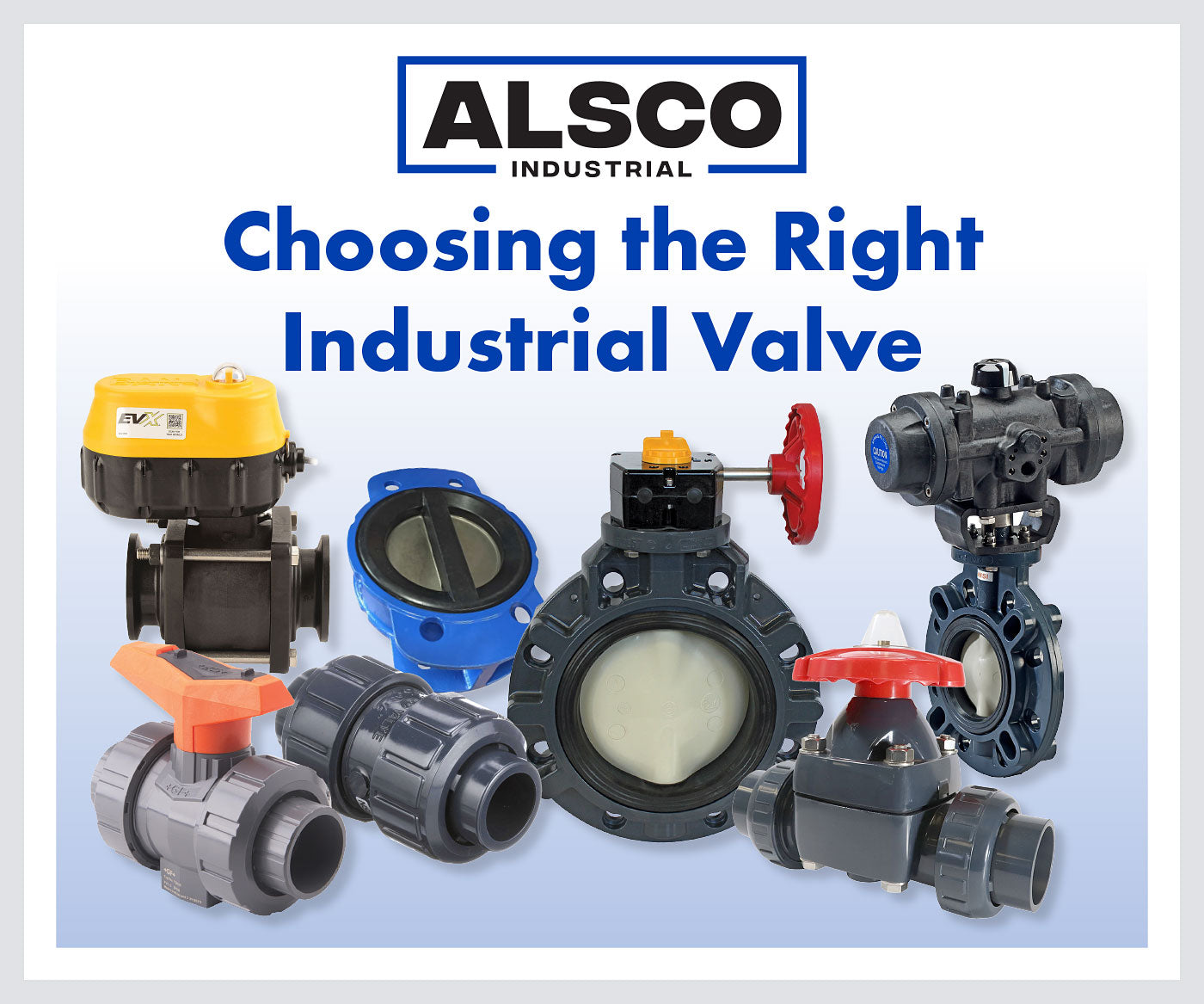
A valve is the component in a fluid handling system that starts, stops, throttles, or redirects flow, and the right choice depends on what job that valve actually needs to do at that point in the line. Isolation, backflow prevention, and precise throttling all call for different valve designs, and using the wrong type in the wrong spot can mean poor flow control, premature wear, or a valve that simply can't do what the system needs. Here's a practical look at the main valve types and where each one fits.
Ball Valves: Fast, Reliable Isolation
Ball valves use a rotating ball with a bore through the center to open or close flow with a quarter turn of the handle. They offer a tight seal when closed and minimal flow restriction when open, which makes them a common default for on and off isolation service. True union ball valves add union connections on both ends of the valve body, so the valve itself can be removed for service or replacement without cutting into the surrounding pipe. Ball valves are also easy to automate with an electric or pneumatic actuator where remote operation is needed.
Check Valves: One Direction Only
Check valves allow flow in one direction and close automatically to prevent backflow, protecting pumps and other equipment from reverse flow damage. Common styles include swing check valves, which use a hinged flap, and spring loaded check valves, which close more quickly and are better suited to systems where backflow needs to be stopped before it gains much momentum. Because check valves work automatically, they don't need a handle or actuator, just correct orientation in the line.
Butterfly Valves: Efficient Flow Control in Larger Lines
Butterfly valves use a rotating disc mounted on a shaft to control flow, and their compact, lightweight design makes them a practical choice for larger diameter lines where a ball valve would be bulky and expensive. They can be used for both isolation and throttling, and the quarter turn operation makes them easy to automate with an actuator. Wafer and lug style bodies determine how the valve mounts between pipe flanges.
Diaphragm Valves: Precise Throttling With a Clean Flow Path
Diaphragm valves use a flexible diaphragm that presses down against a weir or seat to control flow, and because the diaphragm is the only part of the valve in contact with the fluid, they support excellent chemical resistance and are well suited to precise throttling. This design also makes them a strong choice for slurries, viscous fluids, or applications where a clean, unobstructed flow path matters. Diaphragm valves can also be automated where remote or precise flow control is needed.
Globe and Gate Valves: Purpose Built for Throttling or Isolation
Globe valves use a plug and seat design that's well suited to precise throttling, since the flow path forces fluid through a controlled opening rather than around an obstruction. Gate valves use a sliding gate that lifts fully out of the flow path when open, making them better suited to full isolation than to throttling, since a partially open gate can wear unevenly over time. Choosing between the two comes down to whether the application calls for fine flow control or a clean, full open or full closed state.
Automating Valves With Actuators
Many ball, butterfly, and diaphragm valves can be paired with an electric or pneumatic actuator, allowing them to open, close, or modulate remotely rather than by hand. This is common in systems with variable rate control, remote monitoring, or valve banks that would be impractical to operate manually. Actuated valves use the same valve body and seal design as their manual counterparts, so the underlying selection criteria for valve type still apply.
Material Still Matters
Just as with pipe, fittings, pumps, and tubing, valve material has to match the fluid, temperature, and pressure of the system it's installed in. PVC, CPVC, polypropylene, and PVDF valve bodies each offer a different balance of chemical resistance, temperature tolerance, and mechanical strength, and internal components like seats, seals, and diaphragms need their own compatibility check since they're often made from a different material than the valve body itself.
Matching the Valve to the Job
Choosing the right valve starts with the job it needs to do. Isolation calls for a ball, butterfly, or gate valve. Backflow prevention calls for a check valve. Precise throttling favors a globe or diaphragm valve. From there, line size, chemical compatibility, and whether the valve needs to be automated narrow the choice down to a specific type and material.
A Trusted Source for Valves
Alsco Industrial carries ball, check, butterfly, diaphragm, and manifold valves across a range of materials suited to water service, chemical processing, and everything in between. If you're working through valve selection for a new system or replacing an existing one, our technical sales team can help you match the right valve to the application. Reach out at 888-941-3030 or sales@alscoind.com.
Explore More of Our Industrial Product Guides
Fittings, valves, pumps, tubing, and instrumentation all work together in the same fluid handling system, so it's worth seeing how the pieces fit together. Check out our other guides:
- Types of Industrial Pipe Fittings: Elbows, Tees, Unions, and When to Use Each
- Drum, Centrifugal, or Diaphragm: How to Choose the Right Industrial Pump
- Clear PVC, Reinforced, or Chemical Tubing: Choosing the Right Industrial Tubing and Hose for Your Application
- Pressure Gauges, Flow Meters, and Level Sensors: A Practical Guide to Process Instrumentation