
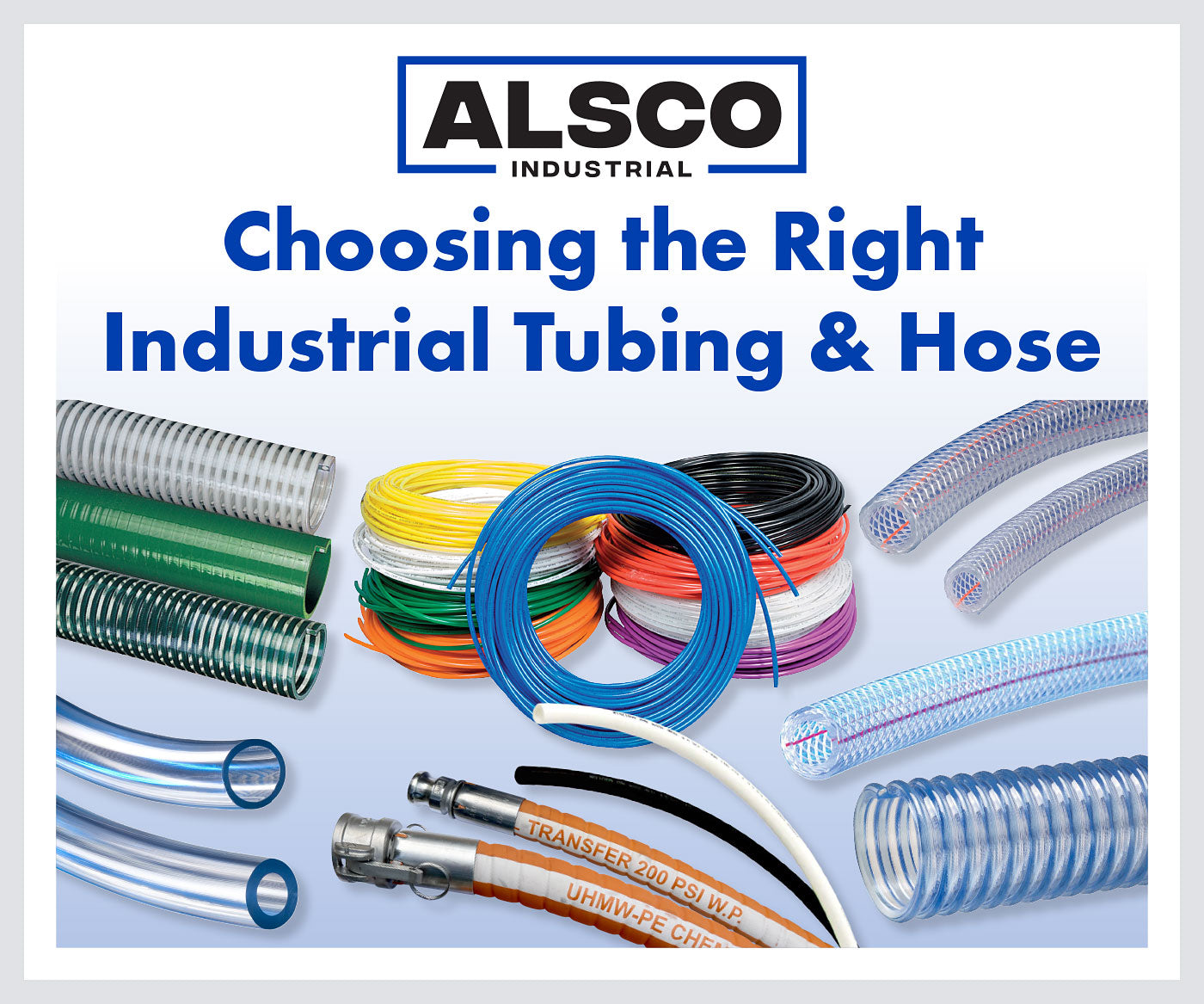
Industrial tubing and hose are flexible piping used to transfer, circulate, or draw fluids and gases in applications where rigid pipe isn't practical, and the right type depends on the fluid involved, the pressure or vacuum it needs to withstand, and whether visual inspection matters. With clear, reinforced, and chemical resistant options all built for different jobs, picking the right tubing comes down to matching its construction to what the system actually demands. Here's a practical look at the main tubing types and where each one fits.
Clear PVC Tubing: Visual Monitoring and General Transfer
Clear PVC tubing is a flexible, transparent option well suited to applications where being able to see the fluid inside matters, such as checking for air bubbles, monitoring flow, or spotting contamination early. It handles general fluid transfer in food, lab, and light chemical applications, and its flexibility makes it easy to route through tight spaces where rigid pipe wouldn't fit.
Yarn Reinforced Hose: Added Strength Without Losing Visibility
Yarn reinforced hose takes the same clear PVC construction and adds a spiraled polyester yarn reinforcement between layers, increasing burst strength and resistance to kinking while keeping the tubing transparent. This makes it a good fit for higher pressure transfer or suction applications where standard clear PVC tubing would be more prone to collapsing or failing under stress.
Tigerflex Hose: Heavy Duty Suction and Transfer
Tigerflex is a PVC suction hose built for demanding transfer applications like agricultural fertilizer lines, irrigation, and dewatering, where the hose needs to hold its shape under vacuum without collapsing. Its rigid helix construction resists crushing from ground traffic or heavy equipment, making it a common choice anywhere a hose is exposed to rough handling or has to be dragged across a job site.
Polypropylene and Polyethylene Tubing: Chemical Resistance and Versatility
Polypropylene tubing supports higher temperatures and pressures than standard PVC tubing, making it a good fit for transferring liquids or gases in warmer process conditions. Polyethylene tubing is a more economical, general purpose option for air, water, and chemical applications where extreme temperature resistance isn't required. Both materials offer solid chemical resistance across a wide range of fluids, which is why they show up so often in general industrial and agricultural fluid transfer.
PTFE FEP Chemical Tubing: Maximum Chemical Resistance
PTFE FEP tubing offers chemical resistance beyond what PVC or polypropylene can support, making it well suited to aggressive chemicals, high or low temperature extremes, and applications where weathering resistance matters over time. Because of that resistance, it's often the choice for chemical transfer and process lines carrying fluids that would degrade other tubing materials over time.
Securing Tubing and Hose: Barbs and Clamps
Most tubing and hose connects to the rest of a system through hose barb fittings, which grip the inside with ridged barbs and are typically secured further with a clamp to prevent slipping off under pressure or vacuum. Choosing a clamp rated for the tubing or hose outer diameter and the pressure involved helps keep that connection secure over time, particularly on suction lines where a loose fit can pull air into the system.
Material Still Matters
Just as with pipe, fittings, valves, and pumps, tubing and hose material has to match the fluid, temperature, and pressure of the application it's used in. A tubing or hose type that works well for water transfer may soften, swell, or degrade quickly when exposed to a stronger chemical, so it's worth confirming chemical compatibility and temperature rating before standardizing on one type across different parts of a system.
Matching the Tubing or Hose to the Job
Choosing the right tubing or hose starts with what needs to move through it and how. Clear PVC and yarn reinforced options support visual monitoring and general transfer. Tigerflex hose supports rugged suction and transfer work. Polypropylene and polyethylene support broader chemical and temperature range. PTFE FEP supports the most aggressive chemical applications. From there, size, length, and connection type narrow the choice down to a specific product.
A Trusted Source for Tubing and Hose
Alsco Industrial carries clear PVC, yarn reinforced, Tigerflex, polypropylene, polyethylene, and PTFE FEP tubing and hose suited to food and beverage, chemical processing, and general industrial applications. If you're not sure which tubing or hose fits a particular application, our technical sales team can help you find the right fit. Reach out at 888-941-3030 or sales@alscoind.com.
Explore More of Our Industrial Product Guides
Fittings, valves, pumps, tubing, and instrumentation all work together in the same fluid handling system, so it's worth seeing how the pieces fit together. Check out our other guides:
- Types of Industrial Pipe Fittings: Elbows, Tees, Unions, and When to Use Each
- Ball, Check, Butterfly, or Diaphragm: How to Choose the Right Industrial Valve
- Drum, Centrifugal, or Diaphragm: How to Choose the Right Industrial Pump
- Pressure Gauges, Flow Meters, and Level Sensors: A Practical Guide to Process Instrumentation