
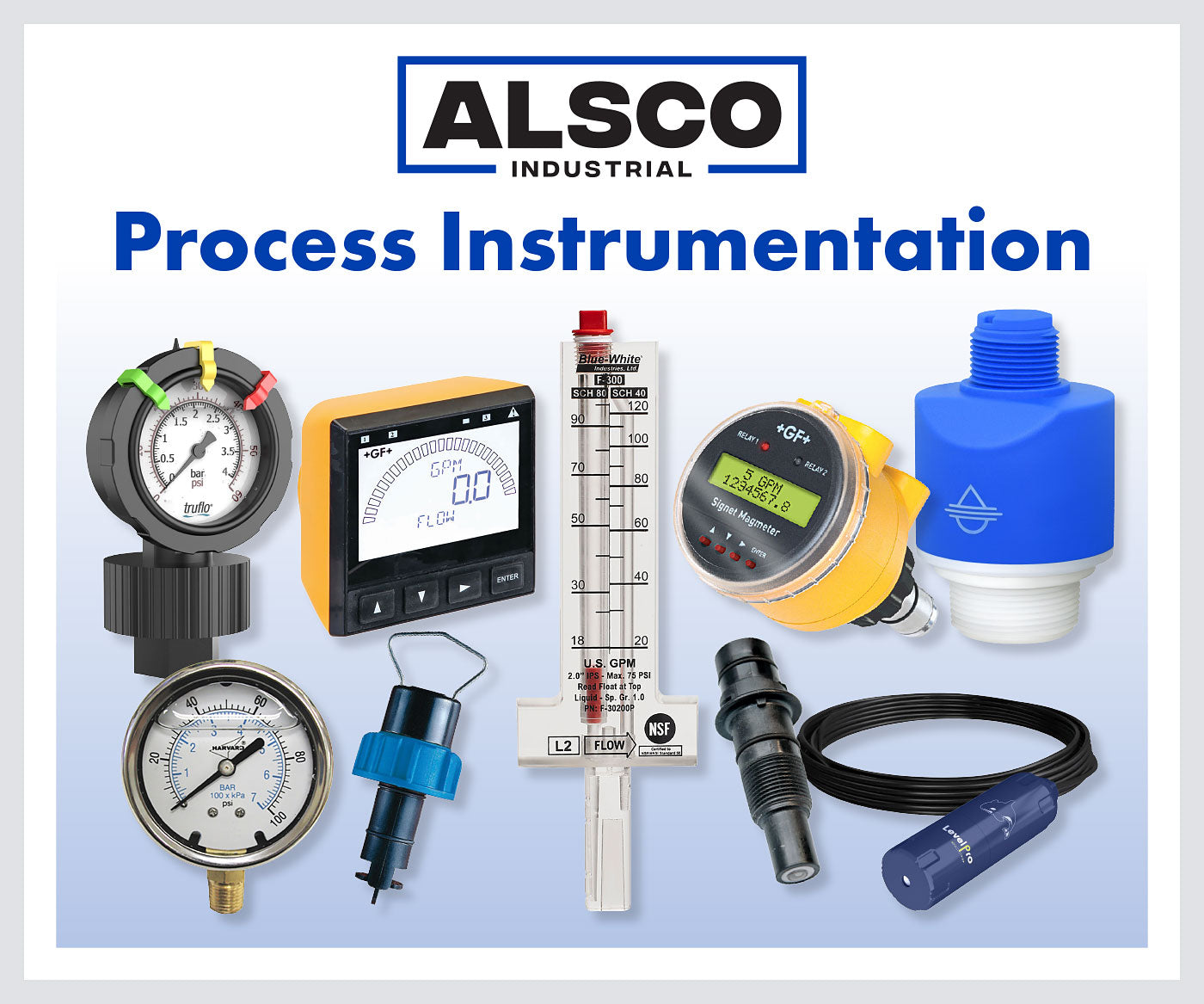
Process instrumentation is the set of devices that measure and monitor conditions like pressure, flow, level, and fluid chemistry in a piping or tank system, giving operators the visibility they need to run a process safely and efficiently. With so many instrument types available, from simple mechanical gauges to networked digital transmitters, choosing the right one for a given point in the system comes down to what needs to be measured and how that data needs to be used. Here's a practical look at the main categories and where each one fits.
Pressure Gauges: Reading Line and Tank Pressure
Pressure gauges give a direct, local reading of pressure at a specific point in a system, whether that's a pump discharge line, a filter housing, or a tank. Dial gauges provide a simple visual reading, while liquid filled gauges dampen needle vibration for a more stable reading in systems with pulsation or vibration. Diaphragm seals or gauge isolators can protect the internal mechanism from corrosive or viscous fluids that would otherwise damage the gauge over time.
Flow Meters and Flow Sensors: Measuring Rate of Flow
Flow meters measure how much fluid is moving through a line over time, which is essential for process control, chemical injection rates, and billing or usage tracking. Different flow meter types suit different conditions: paddlewheel and turbine meters work well in clean liquids, while ultrasonic and clamp-on meters can measure flow without any contact with the fluid at all, which is useful in corrosive or hard to access lines. Flow sensors serve a similar function but are often built for faster, simpler rate detection rather than precision totalizing.
Level Sensors: Monitoring Tanks and Vessels
Level sensors track how much fluid is in a tank or vessel, supporting everything from simple high or low alarms to continuous level monitoring. Float switches and guided float switches offer a straightforward mechanical approach for point level detection, while ultrasonic and radar level sensors measure continuously without touching the fluid, which matters in tanks holding aggressive chemicals or where buildup on a probe would affect accuracy over time.
Electrodes: Monitoring Fluid Chemistry
Electrodes measure the chemical characteristics of a fluid, most commonly pH, ORP, conductivity, resistivity, or chlorine levels. This kind of monitoring matters anywhere a process depends on maintaining a fluid within a specific chemical range, such as water treatment, chemical dosing, or manufacturing processes sensitive to fluid composition. Electrode selection depends heavily on the specific fluid and range being measured, since a probe suited to one application can give inaccurate readings or wear out quickly in another.
Transmitters and Analyzers: Turning Readings Into Data
Transmitters and analyzers take a raw signal from a gauge, sensor, or electrode and convert it into a usable output, whether that's a 4 to 20 mA signal, a digital readout, or a value sent to a control system. Multichannel transmitters can combine several inputs, like flow, pH, and conductivity, into a single display or control point, which simplifies wiring and gives operators one place to check overall system status instead of monitoring each instrument separately.
Matching Instrumentation to the Environment
The fluid and environment an instrument is exposed to matters as much as the measurement itself. Corrosive chemicals, high temperatures, and vibration can all shorten the life of instrumentation that isn't specified correctly, so it's worth confirming wetted material compatibility, temperature rating, and mounting style before installing a gauge, sensor, or electrode rather than assuming a standard model will hold up in a demanding application.
Choosing the Right Instrument for the Job
Start with what needs to be known: a pressure reading, a flow rate, a tank level, or a chemical property. From there, decide whether a simple mechanical reading is sufficient or whether the process needs continuous monitoring, remote signal output, or integration with a control system. That distinction usually narrows the choice down to a specific instrument type and configuration.
A Trusted Source for Instrumentation
Alsco Industrial carries pressure gauges, flow meters, level sensors, electrodes, and transmitters from trusted manufacturers, suited to water treatment, chemical processing, and general industrial systems. If you're not sure which instrument fits a particular point in your process, our technical sales team can help you find the right fit. Reach out at 888-941-3030 or sales@alscoind.com.
Explore More of Our Industrial Product Guides
Fittings, valves, pumps, tubing, and instrumentation all work together in the same fluid handling system, so it's worth seeing how the pieces fit together. Check out our other guides:
- Types of Industrial Pipe Fittings: Elbows, Tees, Unions, and When to Use Each
- Ball, Check, Butterfly, or Diaphragm: How to Choose the Right Industrial Valve
- Drum, Centrifugal, or Diaphragm: How to Choose the Right Industrial Pump
- Clear PVC, Reinforced, or Chemical Tubing: Choosing the Right Industrial Tubing and Hose for Your Application